Rooting Powder vs Fertilizer: The Ultimate Plant Care Face-Off
- Jun 3
- 9 min read
Updated: Aug 25

When plants look weak, slow-growing, or stressed, many gardeners reach for fertilizer first. Fertilizer can be useful, but it is not always the full answer. Sometimes the real issue is not only what nutrients are available in the soil, but how well the plant’s roots can access them.
This is where root powder containing mycorrhizal fungi plays a different role.
Before choosing between rooting powder and fertilizer, it is important to understand that these products are designed to address different aspects of plant growth. Fertilizer focuses primarily on supplying nutrients, while a mycorrhizal root powder focuses on the relationship between beneficial fungi and plant roots. Understanding this difference can help gardeners make better decisions about root development, nutrient availability, and overall plant establishment.
Fertiliser feeds the plant with nutrients
Regular fertilisers are designed to provide nutrients such as nitrogen, phosphorus, potassium, and sometimes micronutrients. These nutrients support plant growth, flowering, fruiting, leaf development, and overall performance.
In simple terms, fertiliser adds nutrients to the growing system.
However, adding nutrients does not automatically mean the plant can absorb them efficiently. Soil condition, root health, moisture, pH, microbial life, and plant stress can all affect nutrient uptake.
Why Nutrient Supply Alone May Not Solve Every Plant Growth Problem
A plant can have nutrients available in its growing medium and still struggle if the root zone is not functioning well. Compacted soil, poor moisture management, limited root exploration, unfavorable pH, transplant stress, and weak root development can all influence how effectively plants access available resources.
This is why plant nutrition should not always be viewed only from the perspective of adding more fertilizer. A healthy root environment is also an important part of helping plants make effective use of the resources around them.
For example, increasing fertilizer application when a plant is already under root stress may not provide the expected improvement.
Instead, gardeners should consider both sides of plant nutrition:
- Nutrient supply — what nutrients are available to the plant
- Nutrient access — how effectively the root system can reach and utilize those resources
This distinction is particularly important when comparing fertilizer with mycorrhizal rooting products.
Root powder supports the root system
Mycorrhizal root powder works differently. It does not act like a traditional fertiliser. Instead, it contains beneficial fungi that form a natural association with plant roots.
These fungi extend into the soil through fine fungal threads, helping the plant explore a larger area around the root zone. This can support access to water and nutrients, especially phosphorus and other minerals that may not move easily through the soil.
In simple terms, root powder helps the plant use its root system more effectively.
Rooting Powder vs Mycorrhizal Root Powder: An Important Difference
The term “rooting powder” can refer to different types of products, so it is important not to assume that every rooting powder works in exactly the same way. Some conventional rooting powders are formulated with rooting hormones that are intended to encourage root initiation in plant cuttings. Mycorrhizal root powders work differently by containing beneficial fungi that establish an association with compatible plant roots.
Therefore, when discussing RootMax or a mycorrhizal root powder, the focus is on root-zone support and the plant–fungus relationship rather than treating the product as a conventional fertilizer or rooting hormone.
This distinction is especially useful for gardeners who are comparing products based only on the phrase “rooting powder.” The product formulation and intended use should always be checked before application.
How Mycorrhizal Root Powder Works Around Plant Roots
A simplified way to understand the process is:
Plant root → Mycorrhizal fungi associate with roots → Fungal threads extend into surrounding soil → Greater soil exploration → Improved access to water and nutrientsThe fungi do not replace the plant's roots. Instead, the association can complement the plant's existing root system by extending its reach into the surrounding growing medium.
The key difference
Fertiliser provides nutrients.
Root powder helps roots access nutrients and water more effectively.
Fertiliser is mainly about nutrient supply. Mycorrhizal root powder primarily focuses on root support, nutrient access, water uptake, and soil biology.
That means the two products are not the same, and one should not always be seen as a replacement for the other. Fertiliser supports the plant by adding nutrients. Root powder supports the plant by helping the root system function more effectively.
Used correctly, they can complement each other.
Rooting Powder vs Fertilizer: Side-by-Side Comparison
Feature | Rooting Powder / Mycorrhizal Root Powder | Fertilizer |
Primary Purpose | Supports the root-zone relationship | Supplies plant nutrients |
Main Focus | Root support and nutrient/water access | Plant nutrition |
Contains Nutrients Such as NPK | Not its primary function | Commonly yes, depending on formulation |
Works Around the Root Zone | Yes | Not its primary purpose |
Supports Nutrient Access | Yes | Supplies nutrients |
Useful During Planting | Yes, when compatible with the plant/product | Depends on fertilizer and plant requirements |
Useful During Transplanting | Yes | Depends on plant needs and product instructions |
Replaces Fertilizer | No | — |
Can They Complement Each Other? | Yes | Yes |
The simplest way to remember the difference is:
Fertilizer = nutrient supply
Mycorrhizal rooting powder = root-zone support
Both can have a place in a complete plant-care strategy, but they should not be treated as interchangeable products.
Why Plants May Need More Than Nutrient Supply
Plant performance depends on several connected factors rather than a single input. A simplified plant-growth chain looks like this:
Healthy growing medium → Healthy roots → Better root-zone interaction → Access to water and nutrients → Active plant growthIf one part of this chain is compromised, simply increasing another input may not solve the underlying problem. This is why root health and plant nutrition should be considered together rather than as competing approaches.
Why this matters in summer
During summer, plants often face heat, faster water loss, and higher nutrient demand. Flowering vegetables, fruiting plants, balcony pots, and newly transplanted seedlings can all experience stress when roots cannot keep up with the plant’s needs.
A healthy root system is especially important during this period. Mycorrhizal fungi can help support root function, while balanced fertilisation can provide the nutrients needed for active growth.
Together, they create a more complete plant care approach.
Root Health Matters Beyond Summer
Although summer conditions can make root-zone management especially noticeable, the difference between rooting powder and fertilizer is not limited to one season. Root development, nutrient availability, moisture management, and soil conditions can influence plant performance throughout the growing cycle.
This makes the rooting powder vs fertilizer comparison relevant during planting, transplanting, repotting, seedling establishment, and ongoing plant maintenance. Instead of choosing a product based only on the season, consider what the plant and root zone actually need at that stage of growth.
How to use them together
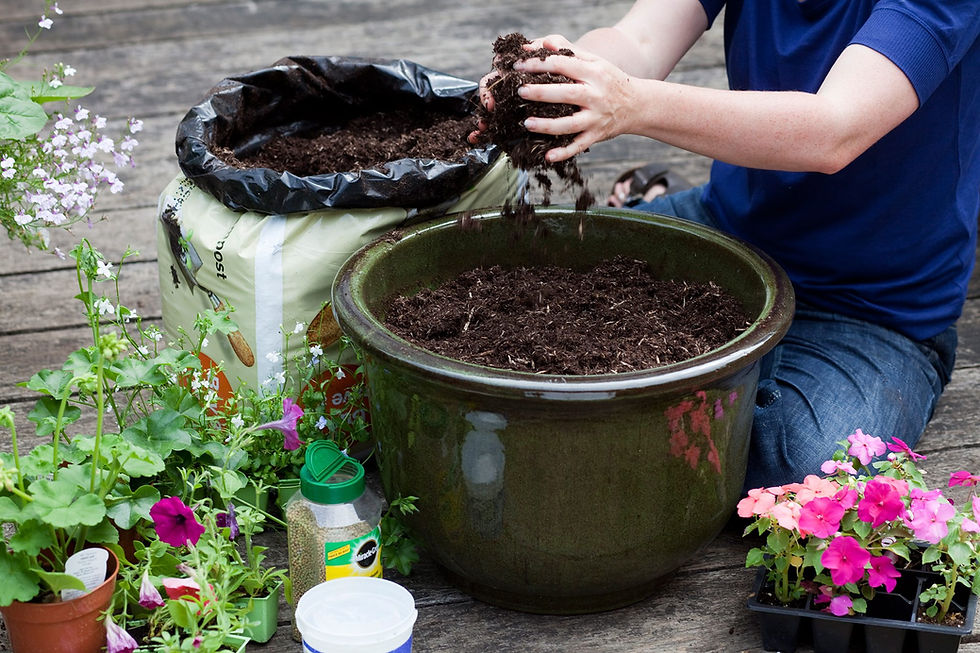
For best results, mycorrhizal root powder should be placed close to the roots. It is especially useful during sowing, transplanting, repotting, or planting into new soil.
Fertiliser can then be used according to the plant’s needs, growth stage, and soil conditions. Avoid over-fertilising, as too much fertiliser may stress plants and disturb the natural balance around the root zone.
When Should You Use Rooting Powder?
Mycorrhizal rooting powder can be particularly relevant when establishing or disturbing a plant's root system. Depending on the product instructions and plant compatibility, common situations can include:
Planting new plants
Transplanting seedlings
Repotting container-grown plants
Establishing plants in a new growing medium
Supporting the root zone during early establishment
The most important consideration is proper placement. A mycorrhizal product generally needs appropriate contact or proximity to living roots so that the beneficial fungi can establish their association with the plant.
When Should You Use Fertilizer?
Fertilizer is primarily used when plants require additional nutrients. The appropriate fertilizer depends on the crop or plant, growth stage, existing nutrient availability, soil or growing-medium conditions, and the formulation being used.
Rather than applying fertilizer simply because a plant looks weak, consider whether the symptoms are actually related to nutrient availability. Plant stress can have many causes, including watering problems, root damage, disease, pests, unsuitable pH, poor drainage, and environmental stress.
Correct diagnosis is therefore important before increasing fertilizer application.
Can Rooting Powder Replace Fertilizer?
No. Mycorrhizal rooting powder should not automatically be considered a replacement for fertilizer. The two products have different roles.
Fertilizer is intended to provide nutrients. Mycorrhizal root powder is intended to support the plant-root relationship and root-zone function. If a plant has a genuine nutrient requirement, using a root-support product alone does not necessarily provide the nutrients needed for growth.
Likewise, providing fertilizer does not mean that every root-zone limitation has been addressed. This is why the two approaches can complement rather than replace one another.
Can Rooting Powder and Fertilizer Be Used Together?
In many plant-care programs, rooting products and fertilizers can be used as complementary inputs, provided that the individual product instructions allow it. The key is to use each product for its intended purpose and avoid excessive applications.
A practical approach is:
1. Establish the plant and its root system properly.
2. Place compatible mycorrhizal root products close to the roots as directed.
3. Provide appropriate water and growing conditions.
4. Supply fertilizer according to the plant's actual nutrient requirements.
5. Avoid excessive fertilizer applications that may unnecessarily stress the root environment.
Always follow the application directions for the specific product rather than assuming that every rooting powder or fertilizer should be applied in the same way.
Rooting Powder vs Fertilizer for Different Plant Stages
Plant Stage | Main Consideration | Product Role |
Seedling Establishment | Developing root system | Root-zone support may be useful |
Transplanting | Root disturbance and establishment | Mycorrhizal root products can be applied according to instructions |
Vegetative Growth | Nutrient demand and root function | Fertilizer may provide required nutrients |
Flowering and Fruiting | Increased nutrient demand | Appropriate fertilization becomes important |
Repotting | New growing medium and root disturbance | Root-zone support may be useful |
Established Plants | Ongoing nutrition and root health | Assess both nutrient and root-zone requirements |
This does not mean every plant needs the same treatment at every stage. Product selection should always be based on the plant, growing conditions, and product directions.
Common Mistakes When Choosing Between Rooting Powder and Fertilizer
Choosing the wrong product can happen when the visible symptom is treated without considering what is happening below the soil. Some common mistakes include:
Assuming rooting powder and fertilizer are the same product
Using fertilizer as a substitute for addressing root-zone problems
Assuming mycorrhizal rooting powder supplies the same nutrients as fertilizer
Applying excessive fertilizer because a plant is growing slowly
Applying a root product without placing it where it can interact with living roots
Ignoring soil moisture, drainage, pH, and root health
Assuming every “rooting powder” contains the same type of active ingredient
Understanding the purpose of each product can help avoid these mistakes and create a more balanced approach to plant care.
Where Does RootMax Fit Into Root-Zone Care?
RootMax is a mycorrhizal root product designed around beneficial fungi and their association with plant roots. It should therefore be understood differently from a conventional Rooting fertilizer.
For gardeners looking to support the root zone during planting, transplanting, or repotting, RootMax can form part of a broader plant-care strategy focused on root development and nutrient and water access.
RootMax does not mean that plants no longer require appropriate nutrition. Instead, it can complement a balanced fertilizer program when both products are suitable for the plant and used according to their respective instructions.
Final thought: For summer
If fertiliser is the plant’s nutrient supply, mycorrhizal root powder is part of the support system that helps roots work better.
For strong summer growth, do not only think about feeding the plant above the soil. Start with what is happening below the soil — because healthy roots are the foundation of healthy plants.
The Bottom Line: Rooting Powder or Fertilizer?
Rooting powder and fertilizer are not competitors in the strictest sense because they address different aspects of plant growth. Fertilizer focuses on supplying nutrients, while mycorrhizal rooting powder focuses on supporting the root-zone relationship and helping plants access available water and nutrients.
If a plant requires nutrition, appropriate fertilizer remains important. If the goal is to support the root zone during planting, transplanting, or establishment, a suitable mycorrhizal root product may have a valuable role.
For many gardeners, the most effective approach is not choosing one blindly, but understanding what the plant, roots, soil, and growing conditions actually require.
Healthy plants start below the soil, and a strong root-zone strategy can work alongside balanced plant nutrition.
Looking to Support Your Plant’s Root Zone?
Explore RootMax Mycorrhizae by Grow Mate to learn more about using beneficial mycorrhizal fungi as part of your plant-care routine.
Frequently Asked Questions
1. Is root powder the same as fertiliser?
No. Root powder and fertiliser do different jobs. Fertiliser provides nutrients to the plant, while mycorrhizal root powder supports the root system and helps roots access nutrients and water more effectively.
2. Can I use root powder and fertiliser together?
Yes, they can be used together. Root powder works best when it is placed close to the roots, especially during sowing, transplanting, or repotting. Fertiliser can be used according to the plant’s growth stage and nutrient needs.
3. When is the best time to apply root powder?
The best time is when the powder can make direct contact with the roots. This makes it especially useful during planting, repotting, transplanting, or when starting new seedlings.
4. Does rooting powder replace fertilizer?
No. Mycorrhizal rooting powder and fertilizer have different functions. Fertilizer supplies nutrients, while mycorrhizal root powder supports the root-zone relationship and nutrient and water access.
5. Can rooting powder help established plants?
Mycorrhizal products are commonly associated with planting, transplanting, and root establishment, but suitability depends on the product and plant. Follow the specific product instructions for application to established plants.


Comments